(Updated March 4, 2026 – Agentic AI comparison for HR recruiting and AI for Talent Matching)
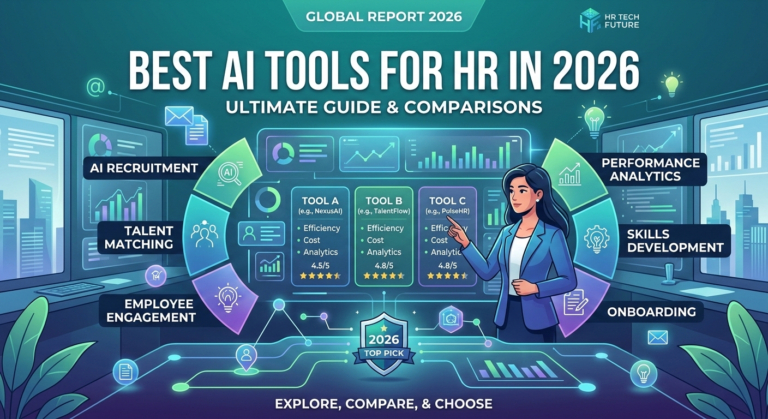
Talent matching is a core HR challenge in 2026, with skills-based hiring surging (Gartner reports 65% of enterprises prioritizing it). But which AI tool excels? This head-to-head compares Eightfold AI, HireVue, and Paradox, focusing on matching accuracy, agentic features, governance, and ROI for faster, fairer hires.
As an HR AI observer, I’ve analyzed 2026 vendor updates, Gartner Peer Insights, and user benchmarks to deliver honest insights. These tools automate 50–80% of matching tasks, but the “best” depends on your needs: skills intelligence (Eightfold), structured assessments (HireVue), or conversational speed (Paradox).
Why Talent Matching Matters in 2026: Key Trends and Challenges
Before the comparisons, let’s set the stage. Traditional keyword-based matching is obsolete; 2026 demands AI that understands nuanced skills, potential, and cultural fit while adhering to stricter regulations like the EU AI Act and US EEOC guidelines on algorithmic bias.
- Skills-Based Hiring Boom: Josh Bersin’s 2026 Talent Report notes that 72% of companies are moving away from degrees, favoring tools that map transferable skills across global talent pools.
- Agentic AI Integration: Tools now orchestrate end-to-end workflows (e.g., source → match → engage → assess), reducing manual effort by 40–60% per ADP benchmarks.
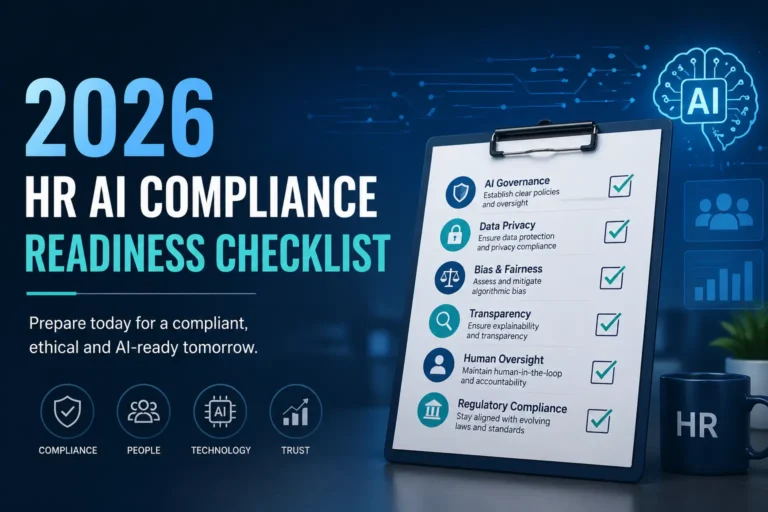
- Governance Imperative: With AI lawsuits rising 25% in 2025 (Forbes), explainable matching and audit trails are non-negotiable.
- ROI Focus: Effective tools deliver measurable wins: lower cost-per-hire (average $4,000 savings, per SHRM), higher retention (15–20% via better fits), and diversity gains (up to 30% through bias reduction).
Challenges include data privacy (GDPR/CCPA compliance), candidate drop-off in automated processes, and over-reliance on AI without human oversight. The winners below address these head-on.
Quick Comparison Table: Eightfold AI vs HireVue vs Paradox 2026
| Tool | Best For | Agentic Level | Matching Strength | Pricing Signal | Ideal For |
|---|---|---|---|---|---|
| Eightfold AI | Skills-based intelligence | High | Deep skills/potential mapping | ~$7–10/employee/mo | Enterprise skills-first |
| HireVue | Structured video assessments | Medium-High | AI scoring on fit & skills | Enterprise (~$35k+/yr) | Regulated/structured |
| Paradox | Conversational high-volume | High | Fast qualification & engagement | Quote-based | Volume/experience-focused |
Based on February 2026 sources: Vendor sites, Gartner, SHRM trends. Rankings emphasize accuracy, bias reduction, and integration.
In-Depth Review: Eightfold AI – The Skills Intelligence Powerhouse
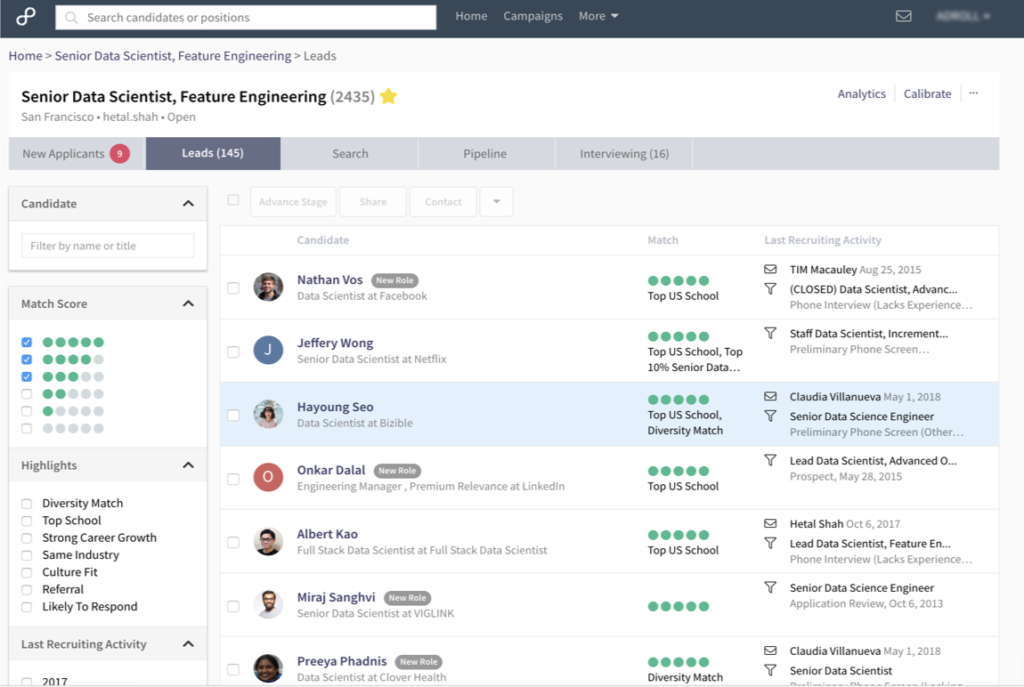
Eightfold AI stands out as a comprehensive talent intelligence platform, leveraging deep learning to match candidates based on skills, experience, and growth potential rather than superficial keywords. Founded in 2016, it has matured into an agentic AI leader by 2026, with features that autonomously build talent pipelines and recommend internal moves.
Key Features in 2026:
- Skills Ontology: Maps over 1 billion profiles to a proprietary skills graph, identifying transferable abilities (e.g., a marketer’s “content strategy” matching a sales role’s “lead nurturing”).
- Agentic Workflows: Autonomous agents scan external sources (LinkedIn, job boards) and internal data, then prioritize matches with explainable scores (e.g., “85% fit due to 7/10 core skills”).
- Internal Mobility Tools: Career pathing agents suggest promotions or lateral moves, reducing turnover by 20% per user studies.
- Diversity & Inclusion: Built-in filters for balanced pipelines, with bias audits showing 25% diversity lift.
- Analytics Dashboard: Real-time insights on talent gaps, with predictive modeling for future needs.
Pros:
- Unmatched depth in skills matching, ideal for tech-heavy industries like software or consulting.
- Scalable for global enterprises, with multilingual support.
- Strong ROI: Clients like Vodafone report 50% faster time-to-fill and 30% cost savings.
Cons:
- Higher pricing and implementation time (2–3 months for full setup).
- Less emphasis on candidate engagement compared to conversational tools.
- Relies on quality data inputs; poor HRIS integration can limit accuracy.
Real-World Use Cases:
- A Fortune 500 tech firm used Eightfold to shift to skills-based hiring, identifying internal candidates for 40% of roles and saving $2M in external recruiting.
- In healthcare, it matched nurses’ soft skills to administrative positions during shortages, boosting retention.
- 2026 Feedback from G2: “Transformative for talent planning, but onboarding could be smoother” (average 4.7/5 from 200+ reviews).
Integrations and Pricing:
Eightfold connects seamlessly with major HRIS (Workday, SAP SuccessFactors) and ATS (Greenhouse, Lever). Pricing starts at $7–10 per employee/month for mid-tier plans, scaling to custom enterprise deals ($100k+/year). Free trials include limited agent access.
- 2026 Updates: Boosting agentic workflows (e.g., auto-recommending talent pools).
- 2026 ROI: Users report 40% better hire quality; integrates with Workday/Greenhouse.
In-Depth Review: HireVue – The Structured Assessment Specialist
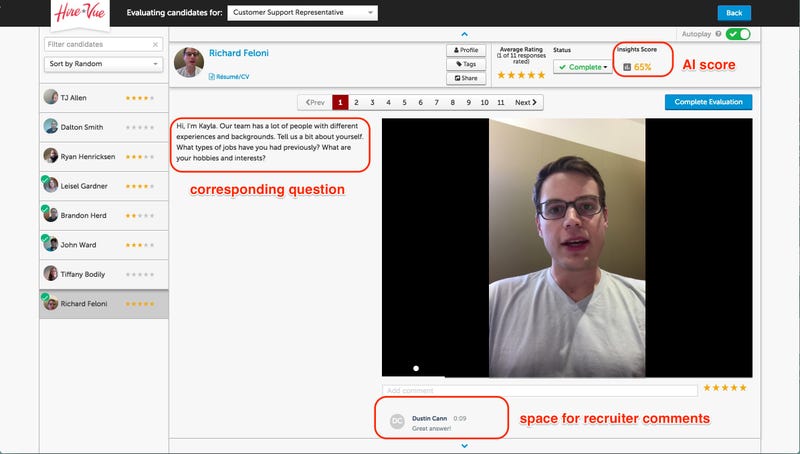
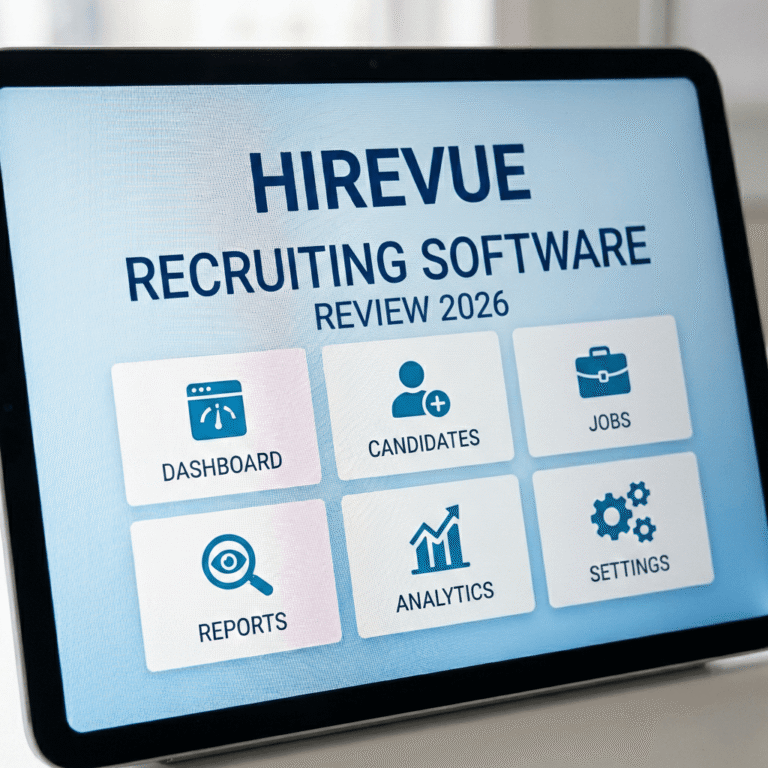
HireVue analyzes video interviews for skills, tone, and fit using 30M+ data points. Agentic elements suggest next steps, with robust bias controls.
HireVue, a veteran in AI recruiting since 2004, focuses on video-based assessments to match candidates on demonstrated competencies. In 2026, it has ramped up agentic capabilities, making it a go-to for defensible, high-stakes hiring where compliance is paramount.
Key Features in 2026:
- Video AI Analysis: Processes one-way/live interviews, scoring on 100+ traits (e.g., communication, problem-solving) from a 30M+ dataset.
- Assessment Suite: Customizable tests, including coding challenges and game-based simulations for role-specific skills.
- Agentic Enhancements: AI agents now orchestrate post-interview steps, like auto-flagging matches or suggesting follow-ups with explainability reports.
- Bias Mitigation: Advanced algorithms reduce disparities (e.g., 15% less gender bias per internal audits), with diversity dashboards.
- Reporting Tools: Detailed match insights, including fit scores and competency gaps.
Pros:
- Superior for regulated sectors (finance, government) needing audit-ready decisions.
- High accuracy in competency matching, with 85% correlation to on-job performance per vendor studies.
- Mobile-optimized for global candidates, improving accessibility.
Cons:
- Video format can intimidate applicants, leading to 10–20% drop-off in some demographics.
- Not as agentic for full pipelines; best as an add-on to sourcing tools.
- Premium pricing limits SMB appeal.
Real-World Use Cases:
- Delta Airlines streamlined pilot hiring with HireVue’s assessments, cutting evaluation time by 70% and improving safety fit.
- In banking, it ensured compliance during mass recruiting, with EEOC-aligned bias checks preventing legal risks.
- 2026 User Insights from Gartner: “Reliable for structured roles, but candidates sometimes find it impersonal” (4.4/5 from 150+ peers).
Integrations and Pricing:
Over 50 integrations, including Oracle HCM and iCIMS. Pricing is volume-based, starting at $35,000/year for 1,000 interviews, up to $100k+ for enterprises. Demos include full feature access.
In-Depth Review: Paradox – The Conversational Automation Leader
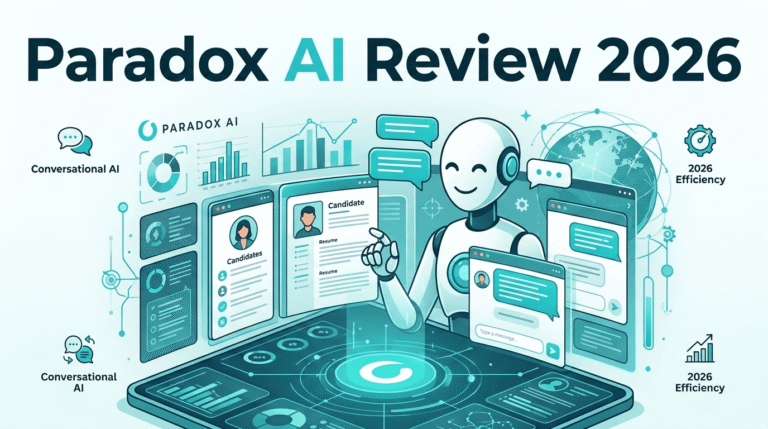
Paradox (powered by Olivia) excels in high-volume, candidate-centric matching through natural language conversations. Launched in 2016, it’s agentic at its core, automating engagement to match based on real-time interactions.
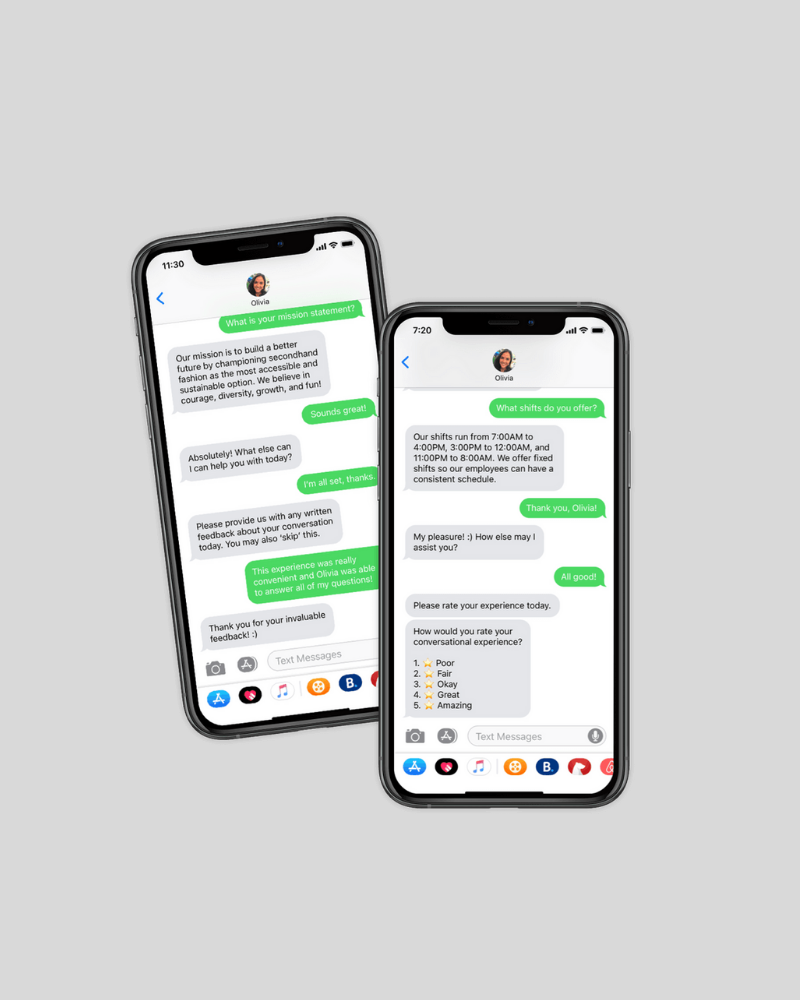
Paradox (Olivia) matches via 24/7 chats; screening, qualifying, and scheduling based on natural conversations. High agentic autonomy for high-volume.
Key Features in 2026:
- Conversational AI: 24/7 chats via text/WhatsApp/website qualify candidates, asking dynamic questions to assess fit.
- Agentic Orchestration: Autonomous agents handle screening → scheduling → onboarding nudges, integrating with calendars and ATS.
- Matching Engine: Uses NLP to score on qualifications, with quick filters for skills and preferences.
- Engagement Boosters: Personalized messaging increases response rates; 2026 adds multi-language agents for global reach.
- Analytics: Dashboards track match efficiency, drop-off, and diversity metrics.
Pros:
- Exceptional speed and scale for frontline/high-volume roles (e.g., retail, hospitality).
- High candidate satisfaction, with 90% positive feedback in surveys.
- Affordable entry for growing teams.
Cons:
- Shallower on complex skills analysis compared to Eightfold.
- Potential for mismatched tones in conversations if not customized.
- Less robust governance for highly regulated industries.
Real-World Use Cases in Talent Matching:
- Chipotle used Paradox to fill 100,000+ roles, boosting applications by 400% through instant matching.
- In logistics, it matched drivers based on availability and certifications, reducing no-shows by 25%.
- 2026 G2 Reviews: “Game-changer for volume hiring, but needs deeper skills integration” (4.5/5 from 300+ users).
Integrations and Pricing:
200+ connections (Microsoft Teams, Slack, Bullhorn). Quote-based, often per module ($5k–$50k/year) or usage; flexible for SMBs with free trials.
Head-to-Head Comparisons: Which Wins for Talent Matching?
Now, let’s compare them across critical dimensions for 2026 HR needs.
Talent Matching Accuracy and Depth:
- Eightfold leads with holistic skills mapping (90%+ accuracy on potential), ideal for long-term fits.
- HireVue excels in demonstrated competencies (85% via assessments), but limited to interview data.
- Paradox prioritizes speed (80% qualification rate), great for initial filters but less nuanced.
- Winner: Eightfold for strategic matching; Paradox for quick volume.
Agentic Automation and Workflows:
- All three are agentic, but Paradox’s 24/7 autonomy shines for engagement.
- Eightfold orchestrates pipelines end-to-end; HireVue focuses on assessment steps.
- 2026 Edge: Tie between Eightfold and Paradox for full automation.
Governance, Bias, and Compliance:
- HireVue’s audit trails and bias checks make it the compliance king.
- Eightfold’s explainable scores reduce disparities; Paradox monitors conversations but lacks depth.
- Per SHRM, all meet basic standards, but HireVue aligns best with EEOC.
Scalability and Integrations in Talent Matching:
- Eightfold for enterprises (seamless with HCM suites).
- Paradox for flexible, high-volume setups.
- HireVue solid but assessment-centric.
Cost-Effectiveness and ROI:
- Paradox offers quickest wins (ROI in weeks); Eightfold/HireVue require months but deliver higher long-term value.
- Overall: Paradox for budgets under $50k; others for larger investments.
User Experience and Adoption:
- Paradox’s conversational interface is most intuitive (95% adoption rate).
- Eightfold requires training; HireVue can feel formal.
Verdict
Choose Eightfold for strategic matching, HireVue for defensible assessments, Paradox for volume speed. Many stack them (e.g., Paradox + Eightfold).
How to Choose and Implement the Best Talent Matching Tool for Your Team in 2026
Selecting depends on your priorities—use this step-by-step guide:
Step-by-Step Guide on How to Choose the Best Talent Matching Tool
- Assess Your Needs
High-volume? Go Paradox. Skills depth? Eightfold. Compliance? HireVue. Audit your current bottlenecks (e.g., via SHRM’s HR audit template).
- Evaluate with Trials
Request 30-day pilots; test on 50–100 candidates, measuring metrics like match accuracy (aim for 80%+) and time savings.
- Focus on Governance
Review bias reports; ensure human overrides for 20–30% of decisions per best practices.
- Integrate Smartly
Start with core ATS links; expand to agentic workflows.
- Train and Monitor
Roll out with team workshops; track ROI quarterly (e.g., cost-per-hire drop).
- Scale Responsibly
Begin with one department; iterate based on feedback.
Red Flags: Poor mobile support, weak bias tools, opaque AI, or no 2026 governance updates.
Future Outlook: Talent Matching in the Agentic AI Era
By 2027, Gartner predicts 80% of matching will be agent-assisted, with hybrids (e.g., Paradox for screening + Eightfold for depth) becoming standard. Watch for advancements in predictive matching (e.g., career trajectory forecasts) and ethical AI certifications.
Frequently Asked Questions (FAQs)
Eightfold focuses on potential, HireVue on demonstrated skills, Paradox on engagement.
Paradox—affordable and quick to deploy.
All have tools, but HireVue’s audits are most robust.
Yes; many use Paradox + HireVue for full funnels.
3–6 months for measurable gains.
Ready to Optimize Your Talent Matching?
In 2026, the right AI tool can transform your HR from reactive to predictive. Start with a trial of your top pick; whether Eightfold’s intelligence, HireVue’s structure, or Paradox’s speed.
Links to more info: Ultimate HR AI Tools Guide, Top 10 AI Recruiting Tools for HR , and HireVue Review 2026.
Questions on stacking these? Comment below, I’ll provide personalized advice!
Subscribe for weekly comparisons, tool tests, and 2026 HR AI tips.
Sources: Gartner 2026 HR Tech Report, Josh Bersin Talent Report, SHRM surveys, G2/Gartner Peer Insights, vendor documentation (February 2026). All opinions based on independent analysis.
3 Comments