Key Takeaways: Article-at-a-Glance
- AI visibility tools track how often and how favorably your brand shows up in answers from ChatGPT, Gemini, Perplexity, and other large language models, not just traditional search rankings.
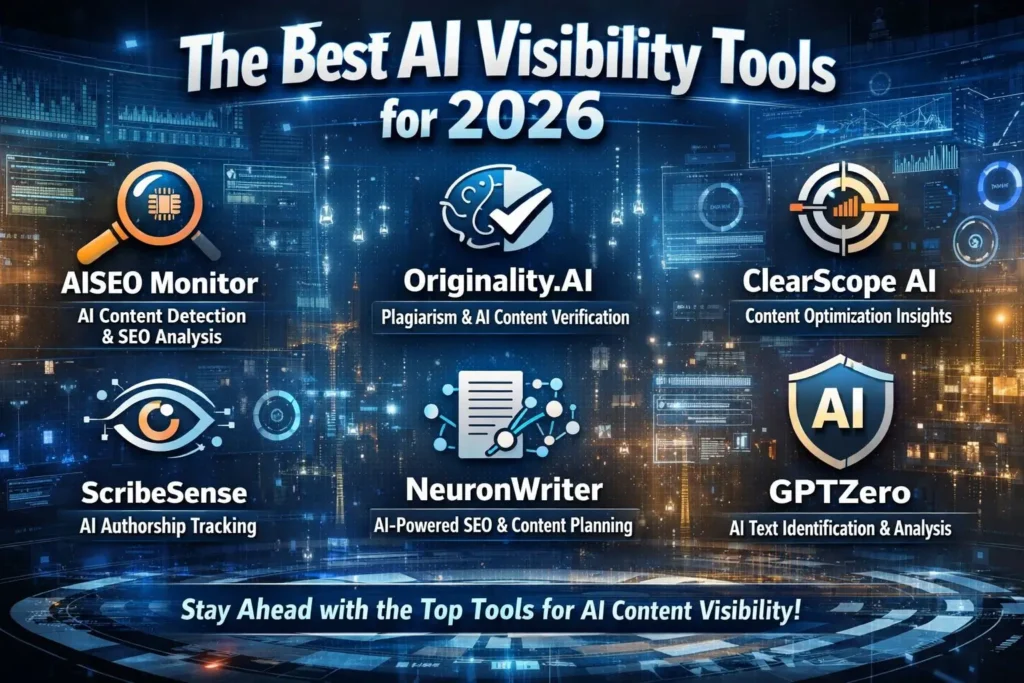
- The best AI visibility tools for 2026 include Profound, Otterly.AI, Peec AI, Scrunch AI, Semrush’s AI Visibility Toolkit, Ahrefs Brand Radar, and Goodie AI, each built for different team sizes and budgets.
- Picking the right tool depends on which AI platforms your customers actually use, how much you’re willing to spend, and whether it needs to plug into your current marketing stack.
- Resources like The Non-Tech AI break down these shifts in plain language, which helps if you’re new to generative engine optimization.
- Stick around for a side-by-side comparison table further down that shows pricing tiers, platform coverage, and standout features for each tool at a glance.
ChatGPT answered a question about your industry today, and your brand either showed up in that answer or it didn’t.
That single moment matters more than most marketers realize. Search behavior has quietly split into two lanes: the old lane where people type queries into Google and click blue links, and a newer lane where people just ask an AI chatbot and trust whatever answer comes back.
If your brand isn’t part of that second answer, you’re invisible to a growing chunk of your audience, no matter how well you rank on page one of Google. Sites like The Non-Tech AI have been tracking this shift closely, translating what’s otherwise a fairly technical topic into something marketers without a computer science degree can actually use.
That’s exactly why AI visibility tools exist. They monitor what AI models say about your brand, your competitors, and your industry, then hand you the data you need to fix gaps before they cost you customers. This guide walks through the best AI visibility tools for 2026, what makes each one worth considering, and how to pick the right one for your specific situation.
Why AI Visibility Tools Matter More Than Ever in 2026
Roughly a decade of SEO wisdom got built around one assumption: a human clicks a search result and lands on your page. That assumption is cracking. When someone asks Perplexity “what’s the best project management software for a 10-person team,” the AI doesn’t send them to ten websites. It picks a handful of answers, synthesizes them, and delivers a direct recommendation, often without a single click to your site.
That changes everything about how brands need to think about visibility. You’re no longer just optimizing for a ranking algorithm that favors backlinks and keyword density. You’re optimizing to be the source an AI model trusts enough to cite, paraphrase, or recommend by name.
The Shift From Google Search to AI Answer Engines
According to Similarweb, AI-driven platforms like ChatGPT and Perplexity have seen sustained month-over-month growth in search-like queries, a trend that’s pulled meaningful traffic share away from traditional search engines in certain verticals. Marketers who built their entire acquisition strategy around Google rankings are now finding that strategy incomplete. The brands pulling ahead are the ones treating AI platforms as a distinct channel, not an afterthought bolted onto existing SEO work.
What These Tools Actually Measure
AI visibility tools generally track a few core things: how often your brand name appears in AI-generated answers, the sentiment or framing of those mentions, which competitors get cited instead of you, and which prompts or question types trigger your brand’s appearance. Some tools go further and show you the exact source pages the AI pulled its answer from, which tells you precisely what content is earning (or losing) you visibility.
Who Needs an AI Visibility Tool Right Now
Not every business needs to drop everything and buy a monitoring subscription tomorrow. That said, a few groups benefit immediately:
- Brands in competitive, high-intent categories like software, finance, or healthcare, where AI recommendations directly influence purchase decisions
- Marketing agencies managing visibility across multiple client accounts and needing a scalable way to report on AI mentions
- Content and SEO teams trying to understand why competitors keep showing up in AI answers when their own content is arguably stronger
- E-commerce brands where “best of” and comparison-style AI answers directly impact which products get bought
If your customers are asking AI tools for recommendations in your category, even occasionally, you’re already part of this conversation whether you’re measuring it or not.
1. Profound
Profound has positioned itself as the go-to platform for enterprise brands that need granular answers about how AI engines talk about them. The tool pulls data directly from ChatGPT, Perplexity, Google’s AI Overviews, and a growing list of other generative engines, then organizes it into dashboards that show exactly which prompts trigger a brand mention and how that mention is framed.
Key Features and Platform Coverage
What sets Profound apart is its prompt-level reporting. Instead of giving you a vague “visibility score,” it shows the actual question someone might ask an AI model, the answer that came back, and whether your brand, a competitor, or no one at all got cited. Profound also tracks citation sources, meaning it tells you which web pages the AI pulled its information from, so you can see exactly what content is winning or losing you exposure.
- Coverage across ChatGPT, Perplexity, Google AI Overviews, and Microsoft Copilot
- Prompt-level breakdowns showing exact AI responses tied to your brand
- Citation tracking that identifies which pages the AI pulled information from
- Competitive benchmarking against named rivals in your category
The depth here is genuinely impressive, but it comes with a learning curve. Teams without a dedicated analyst may find the dashboard overwhelming at first.
Pricing sits toward the premium end, reflecting its enterprise focus rather than a self-serve, plug-and-play setup.
Best Suited For Enterprise Brand Teams
Profound makes the most sense for larger organizations with dedicated SEO or brand teams who need to justify budget allocation with hard data. If you’re reporting up to a CMO who wants to know exactly why your brand lost visibility to a competitor last quarter, this is the kind of granular evidence that answers the question.
2. Otterly.AI
Otterly.AI took a different approach by focusing on simplicity and affordability without gutting the core functionality marketers actually need. It tracks brand mentions across ChatGPT, Perplexity, and Google AI Overviews, then presents the data in a way that doesn’t require a data science background to interpret.
Key Features and Platform Coverage
The tool runs scheduled prompt tests, essentially asking AI engines the same questions your customers might ask, then logging how often your brand appears and in what context. Otterly.AI also includes a share-of-voice metric that compares your visibility against a list of competitors you define, which is genuinely useful for quarterly reporting without needing to build custom spreadsheets.
Where Otterly.AI shines is accessibility. Smaller marketing teams or solo SEO consultants who don’t have enterprise budgets can still get meaningful AI visibility data without committing to a five-figure annual contract. It won’t match Profound’s depth of citation tracking, but for most small-to-midsize brands, it covers the essentials well.
3. Peec AI
Peec AI built its reputation around agency-friendly reporting, which makes sense given how many agencies have had to scramble to add “AI visibility” as a service line without the tooling to back it up.
Key Features and Platform Coverage
Peec AI monitors brand mentions across major AI chat platforms and generates white-labeled reports that agencies can hand directly to clients. It tracks sentiment, not just raw mention counts, flagging whether an AI’s description of a brand skews positive, neutral, or negative. The platform also benchmarks against named competitors automatically, saving agencies the manual work of building comparison sheets by hand.
- White-label reporting built specifically for client-facing agency work
- Sentiment analysis layered on top of standard mention tracking
- Automated competitor benchmarking across multiple client accounts
Best Suited For Agencies Managing Multiple Clients
If you’re running an agency juggling ten or more client accounts, Peec AI’s multi-client dashboard structure saves real time. Instead of logging into separate tools or rebuilding reports from scratch each month, account managers can pull client-ready visibility summaries in a few clicks.
4. Scrunch AI
Scrunch AI takes a slightly different angle by focusing heavily on content optimization recommendations rather than just monitoring. It doesn’t just tell you that your brand is missing from AI answers, it suggests specific content and structural changes that might improve your odds of being cited.
This makes Scrunch AI particularly useful for content teams who want actionable next steps rather than raw data they then have to interpret themselves. The platform analyzes your existing site content against what’s currently winning AI citations in your category, then flags gaps in structure, clarity, or topical coverage.
According to Search Engine Journal, generative engines tend to favor content that answers questions directly and early, often pulling from pages structured with clear headers and concise explanations near the top. Scrunch AI’s recommendations lean heavily into this pattern, nudging content teams toward the kind of structure that AI models seem to prefer when selecting source material.
5. Semrush AI Visibility Toolkit
Semrush added its AI Visibility Toolkit as an extension of its already massive SEO data infrastructure, and that history shows in how the tool performs. Rather than building AI tracking from scratch, Semrush layered it on top of years of keyword, backlink, and traffic data it already had.
How It Builds On Semrush’s Existing SEO Data
Because Semrush already tracks millions of keywords and domains, its AI Visibility Toolkit can cross-reference which of your existing ranking pages are also getting cited in AI answers. This connection between traditional SEO performance and AI visibility is genuinely valuable, since it shows whether your SEO investment is paying off in both channels or just one. Teams already using Semrush for rank tracking will find the AI module integrates smoothly into dashboards they’re already checking daily.
6. Ahrefs Brand Radar
Ahrefs Brand Radar brought its signature data-heavy approach to AI visibility tracking, leaning on the same backlink and content analysis engine that made Ahrefs a staple SEO tool in the first place.
How It Tracks Brand Mentions Across LLMs
Brand Radar scans responses from major AI chat platforms and logs mentions of your brand alongside competitor brands, then ties those mentions back to specific source URLs where possible. This lets you see not just that you were mentioned, but which exact piece of content on the web likely triggered that mention.
The tool also surfaces “mention gaps,” meaning categories or question types where competitors show up consistently but your brand doesn’t appear at all. For content teams trying to prioritize what to write next, this gap analysis is often more actionable than a simple visibility percentage.
7. Goodie AI
Goodie AI is the newer entrant on this list, built specifically around the idea that AI visibility and traditional SEO need to be measured together, not in silos. It combines mention tracking across AI platforms with recommendations for structured data and schema markup, betting that cleaner technical foundations improve AI citation odds over time.
How the Top AI Visibility Tools Compare at a Glance
Choosing between these tools often comes down to team size, budget, and how deep you need the data to go. Here’s a side-by-side breakdown to make that comparison easier.
| Tool | Best For | Platform Coverage | Standout Feature |
|---|---|---|---|
| Profound | Enterprise brand teams | ChatGPT, Perplexity, Google AI Overviews, Copilot | Prompt-level citation tracking |
| Otterly.AI | Small teams and solo consultants | ChatGPT, Perplexity, Google AI Overviews | Affordable share-of-voice tracking |
| Peec AI | Agencies with multiple clients | Major AI chat platforms | White-label client reporting |
| Scrunch AI | Content optimization teams | Major AI chat platforms | Content gap recommendations |
| Semrush AI Visibility Toolkit | Existing Semrush users | Major AI chat platforms | Cross-reference with SEO rank data |
| Ahrefs Brand Radar | Data-driven SEO teams | Major AI chat platforms | Mention gap analysis |
| Goodie AI | Teams wanting SEO plus AI combined | Major AI chat platforms | Schema and structured data guidance |
How to Choose the Right AI Visibility Tool for Your Team
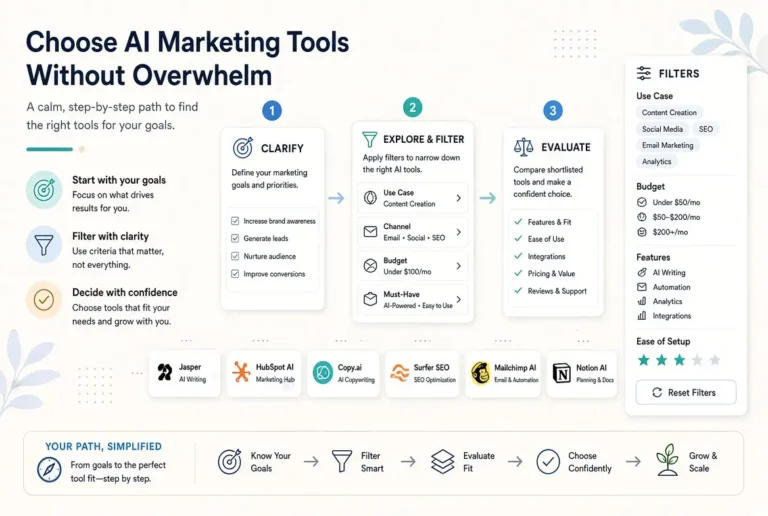
There’s no single “best” tool on this list in a vacuum. The right choice depends entirely on what problem you’re trying to solve and who’s going to be using the data day to day.
Start by being honest about your team’s bandwidth. A tool like Profound delivers incredible depth, but if nobody on your team has time to dig through prompt-level reports every week, that depth goes to waste. Sometimes a simpler tool that gets checked consistently beats a powerful one that gets ignored.
Which AI Platforms You Actually Need to Track
Not every AI platform matters equally for every business. A B2B software company’s customers might lean heavily on ChatGPT and Perplexity for research, while a local service business might barely register in AI search at all yet. Before committing to a tool, check whether it actually covers the platforms where your specific audience is asking questions, rather than assuming broader coverage is automatically better.
Budget and Team Size Considerations
Pricing for AI visibility tools varies widely, and the sticker price often reflects how much manual setup and analysis the platform does for you versus how much you’ll need to figure out yourself. A solo consultant or small marketing team doesn’t need Profound’s enterprise-grade prompt library; they need something fast to set up that still delivers a clear read on brand mentions.
Larger teams with dedicated analysts can justify the higher cost of a tool like Profound because someone’s actually going to mine that prompt-level data for insights every week. Smaller teams are usually better off starting with Otterly.AI or a similar lighter-weight option, then upgrading once they’ve proven the ROI internally and can make a stronger case for a bigger budget line.
Integration With Your Existing Marketing Stack
If your team already lives inside Semrush or Ahrefs for daily SEO work, adding their respective AI visibility modules tends to create less friction than bolting on an entirely new platform. You’re not asking people to check a fifth dashboard; you’re adding a tab to something they already open every morning. That said, if neither tool is already part of your stack, there’s no strong reason to force the integration just for the AI visibility feature alone.
Getting Started With AI Visibility Tracking Today
You don’t need to buy a tool to get a rough sense of where you stand. Before spending a dollar, open ChatGPT, Perplexity, and Gemini and manually ask the kinds of questions your customers might ask, things like “what’s the best [your category] for small businesses” or “compare [your brand] to [competitor].” Pay attention to whether you’re mentioned at all, and if so, how accurately the AI describes what you do.
- List five to ten realistic prompts a potential customer might type into an AI chatbot
- Run those prompts across ChatGPT, Perplexity, and Gemini manually and log the results
- Note which competitors get mentioned instead of you and in what context
- Flag any factual errors or outdated information the AI states about your brand
This manual audit won’t scale, but it gives you a baseline before you commit budget to a monitoring tool.
Once you’ve got that baseline, pick one tool from this list that matches your team size and budget, and run it for at least one full quarter before judging results. AI visibility shifts slowly since models retrain and update their source weighting over time, so a single week of data rarely tells the full story.
From there, treat the monitoring as an ongoing habit rather than a one-time project. The brands that benefit most from these tools check in monthly, adjust their content based on what’s winning citations, and keep testing new prompts as customer language evolves.
My Final Take: Which AI Visibility Tool Is Worth Your Money
If I had to pick one tool for most mid-sized marketing teams right now, it would be Otterly.AI for anyone just getting started, simply because the barrier to entry is low enough that you’ll actually use it consistently. Consistency beats sophistication when you’re still learning what AI visibility even looks like for your brand.
For agencies, Peec AI’s client-facing reporting alone justifies the cost, since it removes hours of manual report-building every month. And for large enterprises with the analyst bandwidth to dig into prompt-level data, Profound remains the most comprehensive option on the market right now.
- Choose Otterly.AI if you’re new to AI visibility tracking and want something affordable and easy to run
- Choose Peec AI if you manage multiple client accounts and need polished reporting fast
- Choose Profound if you have a dedicated analyst and need the deepest possible data
Whichever tool you land on, the real win isn’t the software itself, it’s building the habit of checking how AI describes your brand before a customer or competitor beats you to the punch.
Frequently Asked Questions
These questions come up constantly from marketers just starting to explore AI visibility tracking, so here are quick, direct answers.
What Is an AI Visibility Tool?
An AI visibility tool monitors how often and how accurately your brand appears in answers generated by AI platforms like ChatGPT, Perplexity, and Gemini, then reports on that data so you can adjust your content strategy accordingly.
How Is AI Visibility Different From Traditional SEO Rank Tracking?
Traditional SEO rank tracking measures where your website lands in a list of search results that a human then clicks through, while AI visibility tracking measures whether your brand gets mentioned or recommended inside a direct AI-generated answer, often with no click involved at all.
Can Small Businesses Benefit From AI Visibility Tools?
Yes, especially small businesses in competitive local or niche categories where customers increasingly ask AI chatbots for recommendations before searching Google directly. A lighter-weight tool like Otterly.AI can give small teams meaningful insight without requiring enterprise-level budget or staffing.
Do These Tools Work With ChatGPT, Gemini, and Perplexity?
Most of the tools covered here, including Profound, Otterly.AI, Peec AI, and Ahrefs Brand Radar, track mentions across ChatGPT and Perplexity at minimum, with several also covering Google’s AI Overviews and Microsoft Copilot. Coverage of Gemini specifically varies by tool, so it’s worth confirming current platform support before subscribing.
How Much Should I Expect to Pay for an AI Visibility Tool?
Pricing ranges from affordable monthly plans suited to solo consultants and small teams up to custom enterprise contracts for tools like Profound that offer the deepest prompt-level reporting. As a rule, the more granular the data and the more AI platforms covered, the higher the price tag climbs.
Start tracking your brand’s AI visibility today, and if you want these kinds of shifts explained in plain, practical terms as they happen, The Non-Tech AI is a solid place to keep learning.