Subscription management software tools help businesses handle recurring billing, customer accounts, payment processing, and subscription changes. The right platform can reduce manual work and give customers a smoother billing experience.
Managing recurring payments, renewals, and customer plans can quickly become complicated as a business grows. Subscription management tools help simplify these recurring tasks by automating billing, tracking subscriptions, and providing insights into recurring revenue—so teams can spend less time on administration and more time supporting customers.
As the digital economy continues to evolve, choosing the best subscription management software has become crucial for modern enterprises. Navigating the complexities of modern commerce requires a robust subscription management platform that can seamlessly handle recurring billing and intricate pricing strategies. Whether you are running a startup or an established organization, implementing the right subscription management tool ensures financial accuracy and operational efficiency across every single customer touchpoint.
Introduction to Subscription Management Software
What is Subscription Management Software?
Subscription management software is a specialized application designed to automate billing, invoicing, and the entire customer subscription lifecycle. By utilizing a dedicated subscription management system, businesses can effortlessly handle recurring payments, modify any subscription plan, and process diverse payment methods without manual intervention. This technology acts as the central hub for your subscription business, allowing teams to track crucial subscription data and maintain financial compliance effortlessly.
Importance of Subscription Management in SaaS
For modern SaaS companies, utilizing a sophisticated management tool is vital for reducing churn and optimizing every billing cycle. Because a typical SaaS business relies heavily on predictable, recurring revenue, managing customer relationships through automated dunning management and proactive failed payment recovery safeguards your bottom line. Implementing the best subscription management software empowers B2B SaaS companies to scale rapidly while maintaining precise control over complex revenue operations and customer accounts.
Overview of Subscription Revenue Models
Selecting the right pricing model is fundamental when structuring a flexible subscription for your target audience. Organizations frequently experiment with tiered pricing, usage-based metrics, and customized billing models to maximize profitability throughout the subscription lifecycle management process. Adopting a versatile subscription platform allows you to test various subscription pricing strategies, offer engaging free trials, and adapt your offerings to meet the dynamic demands of today’s competitive marketplace.
Top Subscription Management Software Tools
Recurly: Features and Benefits
Recurly stands out as a powerful subscription management platform designed to help any subscription business optimize its billing cycle and reduce customer churn. By leveraging advanced dunning management and automated retry logic, this robust management tool ensures that every failed payment is addressed promptly, protecting your recurring revenue. Organizations utilizing Recurly can effortlessly experiment with various pricing models, including tiered options and flexible subscription plans, to attract a broader audience. Furthermore, the platform integrates smoothly with your existing accounting software, providing deep visibility into critical subscription data, revenue recognition, and comprehensive subscription metrics to drive strategic business growth.
Stripe: A Comprehensive Billing Solution
Stripe Billing offers an exceptionally versatile infrastructure that empowers SaaS companies and global enterprises to automate billing and manage subscriptions at scale. As a leading subscription management software, Stripe enables businesses to support a wide array of payment methods while maintaining strict compliance across diverse global markets. Companies can easily configure usage-based pricing or complex subscription pricing strategies tailored to their specific B2B SaaS companies requirements. By centralizing your subscription tracker and streamlining the entire subscription lifecycle, Stripe ensures that every invoice is generated accurately, enhancing operational efficiency and improving overall financial management systems for modern digital businesses.
Chargebee: Managing Recurring Billing
Chargebee provides a comprehensive subscription management system that excels at automating complex recurring billing workflows and handling intricate subscription lifecycle management tasks. Whether you are launching new free trials or adjusting a specific subscription plan, this specialized subscription management tool simplifies the administration of your entire subscription business. Chargebee allows teams to analyze essential subscription data, track valuable SaaS metrics, and refine their preferred billing model to maximize customer lifetime value. By orchestrating seamless payment processing and reducing involuntary churn, Chargebee remains an essential asset for any ambitious SaaS business seeking scalable financial operations.
Key Features of Best Subscription Management Tools
| Feature | What It Does | Why It Matters |
|---|---|---|
| Recurring billing | Automatically charges customers on a set schedule | Helps ensure timely, consistent payments |
| Plan management | Creates and updates pricing plans, trials, and add-ons | Makes it easier to adapt subscription offerings |
| Payment processing | Handles transactions and payment method updates | Supports reliable collections and customer convenience |
| dunning management | Sends reminders and retries failed payments | Can help recover revenue and reduce involuntary churn |
| Reporting and analytics | Tracks recurring revenue, churn, and subscriber activity | Helps teams make informed business decisions |
Subscription Tracking Capabilities
Every successful subscription business relies heavily on a comprehensive subscription tracker to monitor essential subscription metrics and gather accurate subscription data in real time. A reliable subscription management platform provides deep visibility into the customer subscription lifecycle, allowing organizations to analyze usage patterns and optimize their chosen subscription model. By leveraging advanced analytics within your subscription management software, teams can easily evaluate ongoing performance, track every active subscription plan, and make informed adjustments to improve overall financial forecasting and operational efficiency.
Pricing Models and Strategies
Developing an effective pricing model is vital for maximizing recurring revenue and attracting diverse customer segments to your SaaS business. Companies frequently experiment with a flexible subscription approach, incorporating tier structures, usage-based metrics, and customized subscription pricing to enhance their competitive advantage. Utilizing a sophisticated subscription management tool enables organizations to test multiple subscription pricing strategies seamlessly, offering targeted free trials and dynamic billing model adjustments without disrupting current operations or complicating existing accounting software integrations.
Integration with Other Management Systems
Connecting your subscription management system with broader enterprise management systems ensures seamless data flow across departments, from sales to accounting software. A top-tier subscription management software integrates effortlessly with CRM platforms and payment gateways to support diverse payment methods and automate revenue recognition protocols. This connectivity eliminates manual data entry errors, streamlines recurring billing operations, and empowers B2B SaaS companies to maintain accurate financial records while scaling their global infrastructure and supporting rapid enterprise expansion worldwide.
Choosing the Right Subscription Management Platform
Factors to Consider for SaaS Businesses
When selecting the best subscription management software, SaaS companies must evaluate essential capabilities to streamline their operations. A scalable subscription platform must efficiently manage complex B2B requirements while simplifying every upcoming billing cycle and invoice generation task. To achieve this, organizations should look for:
- automated recurring payments, robust dunning management, and flexible Stripe Billing capabilities
- a versatile management tool that ensures seamless adaptation to changing market conditions, supports multiple payment methods, and maintains rigorous compliance standards across all international territories and regulatory environments
Understanding Churn and Retention
Minimizing involuntary churn remains a top priority for any subscription business striving to secure predictable recurring revenue and maximize customer lifetime value. Implementing proactive failed payment recovery systems and automated retry logic within your subscription management platform helps retain valuable subscribers who might otherwise be lost. By closely monitoring critical subscription metrics through a dedicated subscription management system, organizations can identify early warning signs of disengagement, refine their subscription lifecycle management strategies, and implement targeted retention campaigns effectively.
Evaluating Subscription Management Solutions
Thoroughly evaluating potential solutions requires comparing how well each subscription management tool handles intricate billing workflows, custom pricing models, and comprehensive subscription lifecycle management. Decision-makers must assess whether platforms like Recurly or Chargebee align with their specific SaaS business goals and long-term financial objectives. By prioritizing ease of use, robust security features, and seamless integration capabilities, organizations can confidently select a premier subscription management platform to manage subscriptions and accelerate sustainable growth through 2026.
Implementing Subscription Management Solutions
Steps to Manage Subscriptions Effectively
To successfully manage subscriptions and maintain financial stability, organizations must establish a structured approach to overseeing the entire customer subscription lifecycle by following these key steps:
- Audit your current billing cycle and identify any bottlenecks within your existing subscription management system.
- Configure your chosen subscription management software to automate recurring payments, streamline invoice generation, and handle multiple payment methods.
- Utilize a reliable subscription tracker so your finance team can closely monitor subscription data, evaluate essential subscription metrics, and optimize every active subscription plan to reduce involuntary churn.
Best Practices for Recurring Billing
Implementing effective recurring billing practices is crucial for protecting recurring revenue and ensuring long-term success for any subscription business. Establishing robust dunning management protocols allows organizations to address failed payment incidents proactively through automated retry logic and timely customer notifications. Furthermore, integrating your primary management tool with advanced accounting software ensures accurate revenue recognition and seamless financial reporting across all departments. Modern SaaS companies should regularly review their billing model to ensure smooth processing, minimize payment friction, and enhance the overall subscriber experience worldwide.
Measuring Success with Subscription Metrics
Tracking the right subscription metrics is essential for evaluating the overall health and profitability of your SaaS business. Key indicators provide deep insights into how effectively your subscription management platform performs:
| Metric Category | Key Indicators |
|---|---|
| Revenue & Acquisition | Monthly recurring revenue, Customer acquisition cost |
| Retention | Churn rates |
By analyzing comprehensive subscription data and lifecycle management reports, decision-makers can identify growth opportunities, refine their subscription pricing strategies, and make data-driven adjustments. Leveraging these analytical insights empowers B2B SaaS companies to optimize their operations and secure a competitive advantage in the market.
Future Trends in Subscription Management
Emerging Technologies in Subscription Billing
The future of subscription billing is rapidly evolving with the integration of artificial intelligence and advanced machine learning algorithms. Next-generation subscription management software leverages predictive analytics to anticipate customer churn before it happens and dynamically adjusts pricing models based on real-time usage patterns. These innovative technologies enable any subscription business to automate complex workflows, personalize user experiences during free trials, and enhance security standards. Adopting these cutting-edge tools ensures that organizations stay ahead of industry demands and maintain maximum operational efficiency.
Impact of B2B Subscription Models
The continuous expansion of B2B SaaS companies has introduced new complexities into subscription management platforms, requiring specialized features for enterprise accounts. Modern B2B subscription models demand multi-tier structures, customized contract management, and sophisticated usage-based billing capabilities to accommodate diverse organizational needs. Implementing a versatile subscription management tool helps enterprises seamlessly handle complex approval workflows, partner billing, and global tax compliance. By streamlining these intricate operations, businesses can foster stronger client relationships and drive predictable revenue growth across all enterprise segments.
Innovations in Subscription Pricing Strategies
Innovative pricing strategies are transforming how organizations approach a flexible subscription framework to maximize customer lifetime value. Companies are moving beyond traditional flat rates, increasingly adopting hybrid models that combine base subscription fees with dynamic, usage-based metrics. Utilizing the best subscription management software allows businesses to experiment with these creative pricing models effortlessly without disrupting current operations. By offering tailored billing options and personalized subscription plans, organizations can attract diverse customer demographics and accelerate revenue generation throughout the evolving digital economy.
Best Subscription Management Software in 2025: Chargebee vs. Stripe vs. Recurly?
The best subscription management tools depend on your business model, billing complexity, and technical resources. Chargebee offers broad subscription billing and revenue management features, making it a strong fit for businesses with complex pricing or global operations. Stripe Billing is a flexible option for teams that want to manage payments and subscriptions within Stripe’s wider payments ecosystem. Recurly focuses on subscription billing, retention, and revenue recovery, which can suit businesses looking to reduce churn and streamline recurring revenue operations. Compare pricing, integrations, reporting, and ease of implementation to find the right fit for your needs.
Selecting the best recurring billing software for your subscription business
Choosing the right recurring billing software can help your subscription business automate payments, reduce failed transactions, and manage customer plans more efficiently. Compare subscription management tools based on pricing, payment gateway integrations, billing flexibility, reporting, and support for your business model. Look for features such as automated invoicing, dunning workflows, plan changes, and clear revenue analytics to find a solution that can scale with your needs.
Subscription pricing models
Subscription pricing models determine how customers are charged for ongoing access to a product or service. Common options include flat-rate plans, tiered pricing with different feature levels, per-user pricing, usage-based billing, and freemium plans. The right model depends on your product, customer needs, and revenue goals. Subscription management tools can help businesses configure plans, automate recurring billing, manage upgrades and downgrades, and track subscription revenue.
Manual vs. Automated Subscription Management
Manual subscription management relies on spreadsheets, calendar reminders, and staff members to track renewals, payments, and cancellations. It can work for a small number of subscriptions, but becomes time-consuming and more prone to missed renewals, billing errors, and inconsistent customer communication as a business grows.
Automated subscription management tools handle recurring billing, renewal notifications, plan changes, and cancellation workflows in one system. Automation can reduce repetitive work, improve billing accuracy, and give teams a clearer view of subscription activity. The right approach depends on your subscription volume, operational needs, and budget; some businesses start manually and adopt automation as complexity increases.
Subscription Management Software & Recurring Revenue (SaaS) Tier List
A subscription management software and recurring revenue (SaaS) tier list compares tools that help SaaS businesses manage subscriptions, automate billing, track recurring revenue, and reduce customer churn. It includes dedicated subscription tools such as Chargebee, Recurly, Zuora, Paddle, and FastSpring, as well as payment platforms with subscription features, such as Stripe Billing. The best fit depends on factors including pricing flexibility, integrations, scalability, ease of use, analytics, tax handling, and the complexity of your billing model. This helps businesses identify the subscription management tools best suited to their needs.
Common Challenges in Managing Subscriptions
Managing subscriptions can become complicated as a business grows. Teams may struggle to track recurring payments, keep customer and billing information up to date, handle cancellations, and manage renewals across multiple platforms. Missed payment updates can lead to failed transactions or revenue leakage, while unclear cancellation processes may frustrate customers. The subscription management tools help centralize these tasks, automate routine workflows, and give businesses a clearer view of billing activity and subscription changes.
Subscription Management for B2B vs. B2C: What’s Different?
Subscription management looks different in B2B and B2C because the customers, pricing models, and billing needs differ. The right subscription management tools should support the workflows specific to each business model.
B2B subscription management
B2B subscriptions often involve negotiated pricing, custom contracts, annual commitments, and multiple users or departments under one account. Businesses may need tools to manage quotes, approvals, renewals, invoices, purchase orders, and account-level permissions. Flexible billing is also important when contracts include usage-based fees, tiered plans, or mid-term changes.
B2C subscription management
B2C subscriptions typically serve many individual customers through standardized plans, often billed monthly or annually. The focus is on a smooth self-service experience: simple sign-up and cancellation, easy plan changes, secure payments, and clear billing information. Tools should also help manage trials, discounts, payment failures, and customer retention at scale.
In short, B2B subscription management prioritizes contract flexibility and account complexity, while B2C prioritizes convenience, automation, and volume. Before choosing subscription management tools, consider your customers’ buying process, pricing structure, and support requirements.
Types of Subscription Management
Subscription management tools support different business models and billing needs. Common types include:
- Recurring billing management: Automates recurring charges, billing schedules, invoices, and payment retries.
- Customer self-service management: Lets subscribers update payment details, change plans, pause subscriptions, or cancel their accounts.
- Usage-based management: Tracks customer activity or consumption and calculates charges based on usage.
- Membership management: Handles member sign-ups, renewals, access permissions, and member communications.
- Subscription analytics: Tracks metrics such as recurring revenue, churn, retention, and customer lifetime value.
Some subscription management tools combine several of these capabilities, making it easier to manage the full subscription lifecycle in one platform.
Subscription Billing Business Examples
Subscription billing works across many industries, giving businesses a predictable way to charge customers on a recurring schedule. Common examples include:
- Software as a service (SaaS): Charge monthly or annually for access to software, with plans based on features, users, or usage.
- Streaming and digital media: Bill recurring fees for access to video, music, news, or other digital content.
- Memberships: Collect recurring payments for gyms, professional associations, online communities, or premium services.
- Subscription boxes: Charge customers at regular intervals for curated products, such as food, beauty items, or pet supplies.
- Telecommunications and utilities: Bill customers periodically for phone, internet, or other ongoing services.
Subscription management tools can help these businesses automate recurring invoices, manage plan changes, track payments, and handle renewals.
What Is a Subscription Tracker?
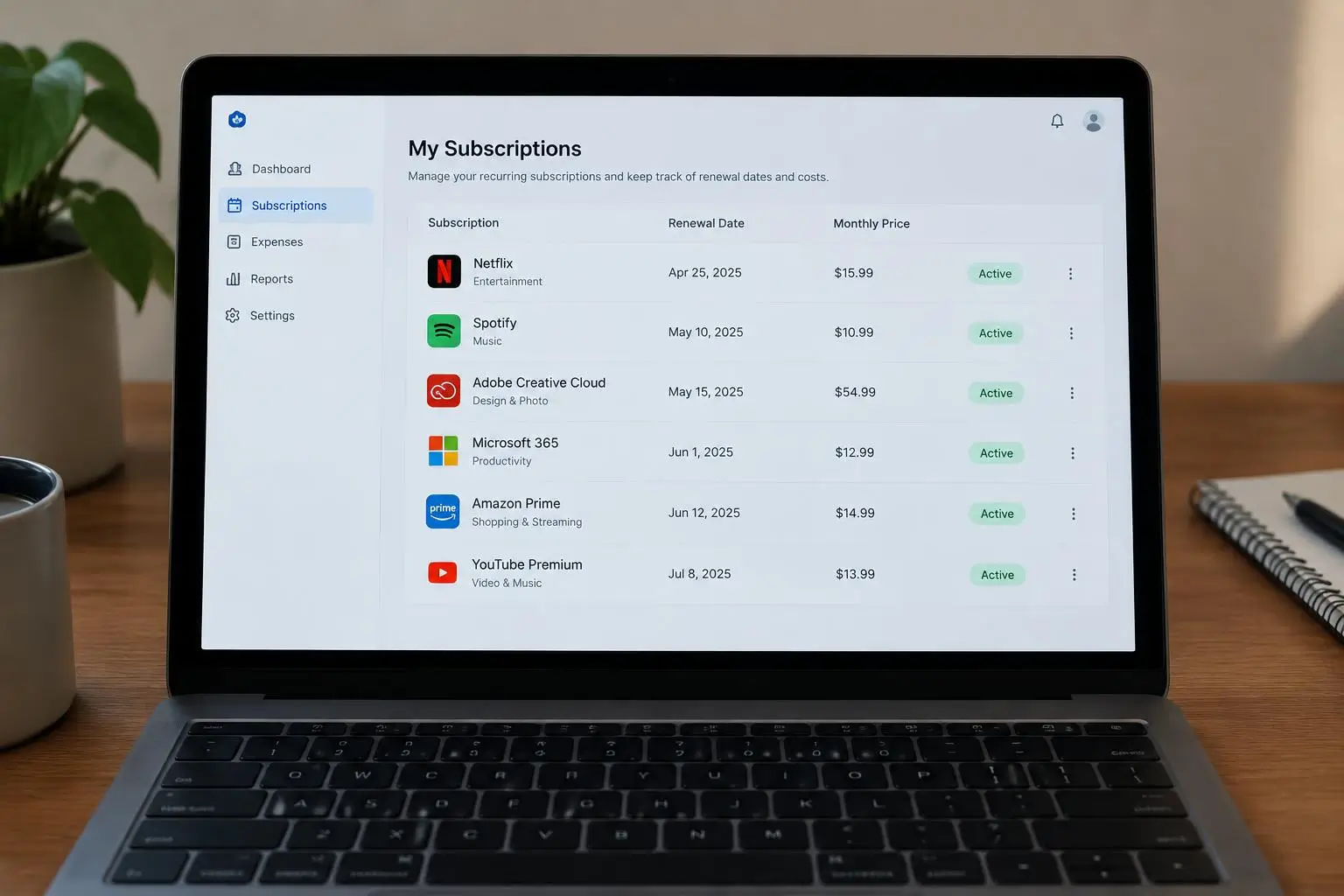
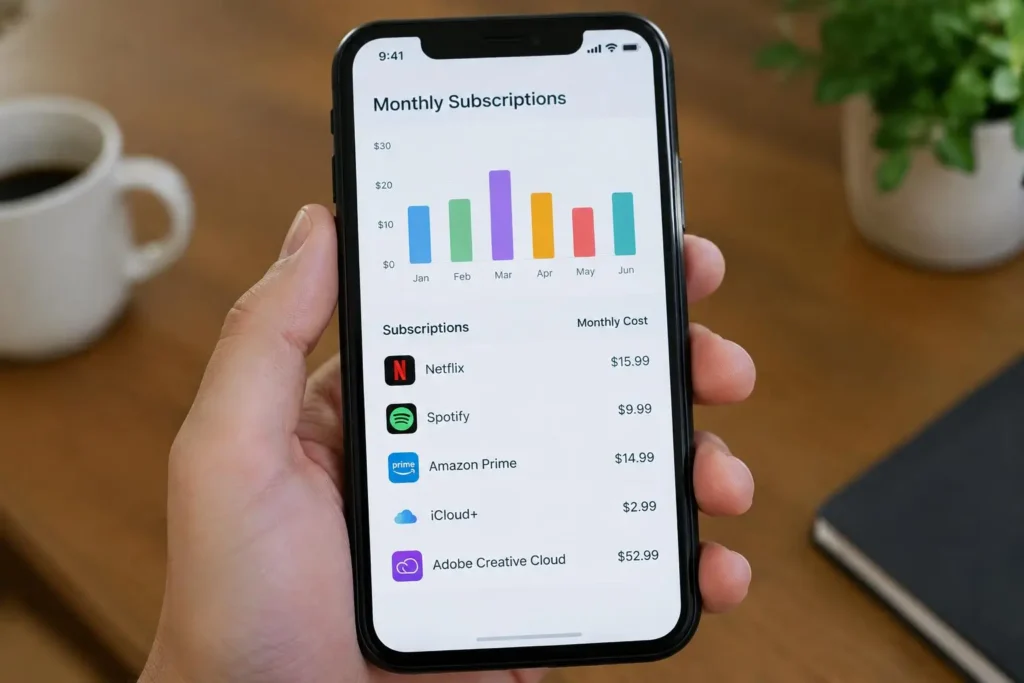
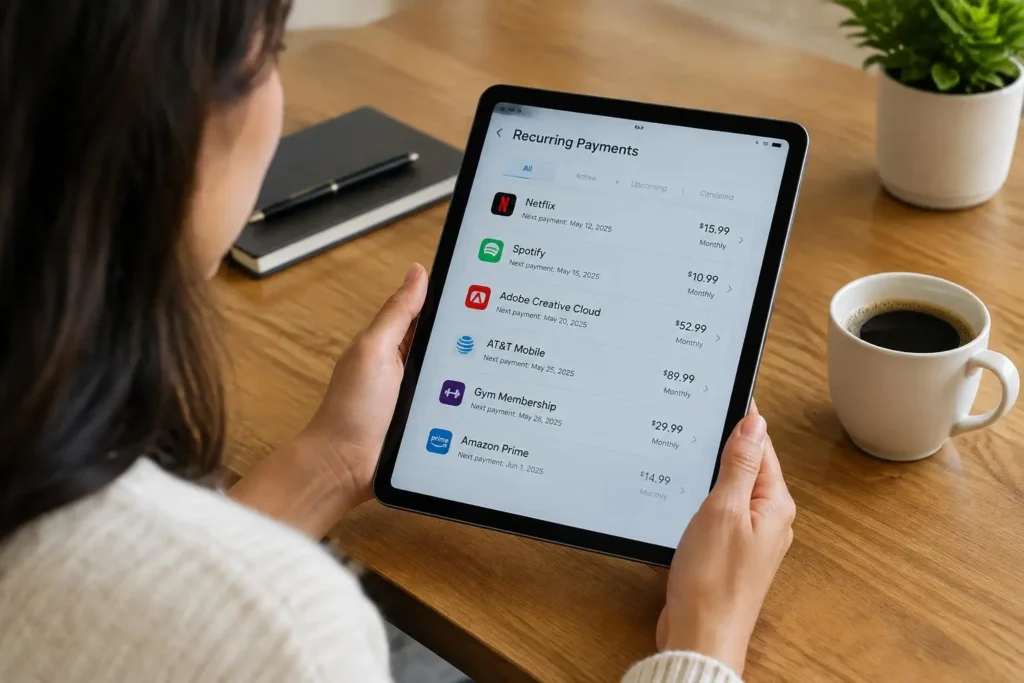
A subscription tracker is a tool that helps you monitor recurring payments, renewal dates, and subscription costs in one place. Many subscription management tools also send payment reminders, highlight price changes, and help you identify services you no longer use, making it easier to manage expenses and avoid unwanted renewals.
Billing Management Systems
Billing management systems help businesses automate invoicing, process recurring payments, and track revenue. When integrated with subscription management tools, they can simplify plan changes, renewals, and payment updates while giving teams a clearer view of subscription activity and billing performance.
5 Leading Subscription Management Software Solutions
The right subscription management tools can help businesses handle recurring billing, customer accounts, plan changes, and revenue reporting. Here are five widely used options:
- Chargebee: Supports recurring billing, subscription lifecycle management, and revenue operations for growing businesses.
- Recurly: Offers subscription billing, customer retention features, and analytics for companies with recurring-revenue models.
- Zuora: Provides subscription, billing, and revenue management capabilities for complex enterprise business models.
- Stripe Billing: Helps businesses create and manage subscriptions, automate recurring payments, and handle usage-based pricing.
- Paddle: Combines subscription billing with payment processing and tax handling for software and digital product businesses.
Compare each platform’s pricing, integrations, billing flexibility, and reporting features to find the best fit for your business.
Key subscription business model metrics to track
Tracking the right metrics helps you understand revenue, customer retention, and business health. Subscription management tools can bring these figures together so you can spot trends and make informed decisions.
- Monthly recurring revenue (MRR): Predictable monthly income from active subscriptions.
- Annual recurring revenue (ARR): The annualized value of recurring subscription revenue.
- Customer churn rate: The percentage of subscribers who cancel during a given period.
- Customer lifetime value (CLV): The estimated revenue a customer generates over the length of their relationship with your business.
- Customer acquisition cost (CAC): The average cost of gaining a new subscriber.
- Average revenue per user (ARPU): The average recurring revenue earned per subscriber.
- Renewal rate: The percentage of subscriptions that renew at the end of a billing period.
Is there an app that manages all subscriptions?
Yes. Subscription management tools can help you track recurring payments, see upcoming charges, and organize subscriptions in one place. Some tools also offer cancellation reminders or help you cancel services, though features and supported providers vary. Check how an app connects to your accounts and handles your data before signing up.
What is the best way to manage subscriptions?
The best way to manage subscriptions is to use subscription management tools that bring billing, renewals, customer data, and payment updates together in one place. Automating recurring payments and renewal reminders can reduce manual work, while clear reporting helps you track revenue, spot cancellations, and make informed decisions as your business grows.
What is the best payment processor for subscriptions?
The best payment processor for subscriptions depends on your business model, target markets, and billing needs. Stripe Billing is a popular choice for flexible recurring payments, while other providers may suit businesses that prioritize specific payment methods, regions, or integrations. When comparing options, consider transaction fees, supported currencies, payment retries, tax handling, and how well the processor works with your subscription management tools.
What are some examples of subscription-based software?
Examples of subscription-based software include project management platforms, accounting apps, customer relationship management (CRM) systems, video conferencing services, and cloud storage tools. Popular options include Asana, QuickBooks Online, Salesforce, Zoom, and Dropbox. Businesses can use subscription management tools to track recurring software costs, monitor renewals, and manage subscriptions in one place.
What are the best subscription management tools for businesses?
The best subscription management tools depend on your business model, billing needs, and existing software. Popular options include Stripe Billing for flexible payment and recurring-billing workflows, Chargebee for managing subscription lifecycles and revenue operations, Recurly for subscription billing and retention features, and Zoho Subscriptions for businesses seeking a straightforward billing platform. Compare each tool’s pricing, payment integrations, tax support, reporting, and ability to handle plan changes and cancellations. The right subscription management tool should automate recurring tasks while making it easy for customers to manage their subscriptions.
What features should subscription management software include?
Effective subscription management tools should include automated recurring billing, flexible plan and pricing controls, payment processing, and support for upgrades, downgrades, pauses, and cancellations. Look for dunning workflows to recover failed payments, customer self-service portals, tax and invoicing support, and integrations with your accounting, CRM, and analytics platforms. Reporting on churn, recurring revenue, customer lifetime value, and payment performance helps teams make informed decisions, while strong security and compliance features protect customer data.
How do you choose the right subscription management tool?
Choose a subscription management tool by matching its features to your business model, customer needs, and growth plans. Compare billing flexibility, support for recurring and usage-based pricing, payment and tax integrations, and tools for handling upgrades, cancellations, and failed payments. Check that it provides clear reporting, reliable security, and integrations with your existing systems. Finally, compare total costs and test the user experience for both your team and your customers before deciding.
How can subscription management tools help reduce churn and recover failed payments?
Subscription management tools help reduce churn by making it easier for customers to update plans, change payment details, pause subscriptions, or cancel with clear options. They can also identify subscribers at risk of leaving and trigger timely reminders or personalized retention offers. To recover failed payments, these tools automate payment retries, notify customers when a charge fails, and provide secure links to update expired cards or billing information. Together, these features reduce involuntary cancellations, recover revenue, and create a smoother customer experience.
Can subscription management tools integrate with a CRM and other business systems?
Yes. Many subscription management tools integrate with CRMs and other business systems through built-in connectors, APIs, or automation platforms. These integrations can sync customer, subscription, payment, and renewal data with CRM, accounting, ERP, customer support, and ecommerce systems. Before choosing a tool, check which platforms it supports, what data can be synchronized, and whether integrations work in real time or require configuration.
How long does it take to implement subscription management software?
Implementation timelines for subscription management tools typically range from a few days to several weeks. A straightforward setup using standard integrations and existing pricing plans may take only a few days, while migrating subscription data, configuring complex billing rules, connecting multiple systems, and testing workflows can take several weeks or longer. The timeline depends on your business requirements, data quality, integration needs, and the level of customization involved.
Is there an app that can manage all my subscriptions?
Yes. Subscription management tools help you track recurring payments, monitor renewal dates, and manage subscriptions from one place. Some apps can also identify recurring charges and help you cancel unwanted services. Features vary, so check whether a tool supports your payment methods and the subscriptions you want to manage.

How Subscription Management Tools Work in Azure
Subscription management tools in Azure help organizations organize resources, control access, monitor spending, and apply governance across cloud environments. Administrators can use the Azure portal, Azure CLI, or PowerShell to create and manage subscriptions, assign role-based access control (RBAC) permissions, and group subscriptions under management groups. Azure Policy helps enforce standards, while Microsoft Cost Management provides spending reports, budgets, and alerts. Together, these tools make it easier to oversee Azure resources and manage them consistently.
Are subscription management tools free?
Some subscription management tools offer free plans or trials, but these may limit the number of subscriptions, users, or features available. Paid plans typically provide advanced billing automation, analytics, and integrations. Compare pricing and plan limits to find a tool that fits your needs.
Which subscription management tools are best?
The best subscription management tools depend on your business model, billing needs, and existing software. Stripe Billing is a flexible choice for businesses that want to manage recurring payments and customize billing workflows. Chargebee and Recurly offer broader subscription and revenue management features for growing or enterprise businesses. Paddle can suit software companies seeking a platform that also handles tax and payment compliance, while Zuora is designed for complex, large-scale subscription operations. Compare pricing, payment integrations, dunning and invoicing features, reporting, and ease of use before choosing.
How Subscription Management Tools Work
Subscription management tools help businesses oversee the full customer subscription lifecycle. They connect with payment processors and other business systems to automate recurring billing, manage plans and pricing, track renewals, and handle upgrades, downgrades, or cancellations. Customers can often update their payment details and manage their plans through self-service portals. The tools also record subscription and payment activity, helping teams monitor revenue, identify failed payments, and understand customer retention.
How Subscription Management Tools Are Used
Subscription management tools help businesses handle recurring billing and customer subscriptions in one place. Teams use them to create plans, process payments, manage upgrades and cancellations, monitor renewals, and send billing notifications. These tools can also track subscription metrics, such as recurring revenue and churn, helping businesses improve customer retention and make informed decisions.
Which Subscription Management Tools Are Available?
Subscription management tools help businesses handle recurring billing, payments, plan changes, renewals, and customer accounts. Options include all-in-one platforms such as Chargebee, Recurly, and Zuora; payment providers with subscription features such as Stripe Billing and PayPal; and tools built into ecommerce platforms. The right choice depends on your business model, payment methods, integrations, reporting needs, and budget.
When Subscription Management Tools Are Used
Subscription management tools are used to handle recurring billing, track customer plans, process upgrades and cancellations, and monitor renewals. Businesses use them to automate subscription workflows, reduce billing errors, and give customers a clearer way to manage their accounts.
When Subscription Management Tools Are Not Working
If subscription management tools are not working, start by checking your internet connection and confirming that you’re signed in with the correct account. Refresh the page, try another browser, and clear your browser cache. If subscription details are missing or changes won’t save, check for service outages or contact the provider’s support team. Avoid making duplicate changes while a request is processing, and keep confirmation emails or transaction records until the issue is resolved.
How does subscription management software help brands meet their goals?
Subscription management software helps brands meet their goals by automating recurring billing, simplifying plan changes, and making it easier for customers to manage their subscriptions. With tools for tracking payments, reducing failed transactions, and analyzing subscriber behavior, businesses can improve retention, forecast revenue, and make informed decisions about pricing and growth.
Who typically uses subscription management software within an organization?
Subscription management software is typically used by finance and accounting teams to track recurring expenses, manage renewals, and control budgets. IT and procurement teams use subscription management tools to monitor software licenses, user access, and vendor contracts, while department managers use them to oversee subscriptions for their teams. In smaller organizations, one person may handle all these responsibilities.
Are subscription trackers worth it?
Subscription trackers can be worth it if you pay for several recurring services or have trouble keeping track of renewal dates. These subscription management tools help you see what you’re paying for, spot unused subscriptions, and avoid unexpected charges. They’re most useful when the money you save outweighs any app fees and you’re comfortable sharing the financial information they require. If you only have a few subscriptions, a calendar reminder or spreadsheet may be enough.
Why is subscription management becoming more popular?
Subscription management is becoming more popular as businesses adopt recurring-revenue models and customers subscribe to more digital services. Subscription management tools help companies automate billing, manage renewals, reduce failed payments, and give customers an easier way to update or cancel plans. These capabilities save time, improve the customer experience, and provide clearer insight into recurring revenue.
Why do you need subscription management software?
Subscription management software helps businesses automate recurring billing, track customer plans, and manage renewals, upgrades, and cancellations. These subscription management tools reduce manual work, improve billing accuracy, and give teams clearer insight into revenue and customer activity. They can also make it easier to handle payment failures, manage customer accounts, and deliver a smoother subscription experience as a business grows.
Which subscription management tool actually fits your use case?
The right subscription management tool depends on how you sell and manage recurring services. Look for features that match your needs, such as automated billing, plan changes, payment retries, customer self-service, analytics, and integrations with your existing systems. A small business may prioritize ease of use and predictable pricing, while a growing company may need advanced reporting, revenue recovery, and support for multiple currencies or billing models. Compare tools against your current workflows and future requirements before choosing.
Which subscription management software is best for small business?
The best subscription management software for a small business depends on its billing needs, budget, and existing tools. Look for subscription management tools that automate recurring payments, handle plan changes and cancellations, track revenue, and integrate with your payment processor and accounting software. Compare pricing, ease of use, and room to scale, then choose a platform that fits your business today without adding unnecessary complexity.
Which enterprise subscription management software is best?
The best enterprise subscription management software depends on your billing model, integrations, and reporting needs. Zuora is often suited to complex, high-volume subscription businesses, while Chargebee and Recurly offer flexible billing and revenue operations features. Compare automation, invoicing, usage-based pricing, integrations, compliance, and total cost to find the right fit for your organization.
What’s the difference between recurring billing and subscription management?
Recurring billing automatically charges customers on a regular schedule, such as monthly or annually. Subscription management covers the broader process of overseeing a subscription throughout its lifecycle, including sign-ups, plan changes, renewals, cancellations, customer information, and billing. Recurring billing is one feature of subscription management tools, which help businesses manage these tasks in one place.
What’s the difference between billing-focused subscription tools and SaaS management platforms?
Billing-focused subscription management tools handle the customer-facing side of recurring revenue, including plans, payments, invoicing, renewals, and cancellations. SaaS management platforms focus on the software a company buys for its own teams: they track subscriptions, usage, renewals, costs, and access to help manage vendors and reduce waste. In short, billing tools help businesses sell and manage subscriptions; SaaS management platforms help businesses manage the software subscriptions they purchase.
What’s the difference between Stripe Billing and other subscription management tools?
Stripe Billing is a subscription management tool built into Stripe’s payments platform, making it a natural fit for businesses that already use Stripe to process payments. It supports recurring billing, usage-based pricing, invoicing, and payment recovery, with APIs for custom workflows. Other subscription management tools may offer more specialized features, broader integrations with non-Stripe payment providers, or simpler no-code administration. The best choice depends on your payment setup, pricing model, integration needs, and how much customization you require.
What types of subscription models does Stripe support?
Stripe supports several subscription models, including flat-rate, per-seat, tiered, and usage-based pricing. Businesses can also offer free trials, discounts, and recurring billing intervals such as monthly or annual plans. These options make Stripe’s subscription management tools flexible enough for a range of products and services.
What types of subscription models can subscription management support?
Subscription management tools can support a range of models, including recurring subscriptions billed monthly or annually, usage-based pricing, tiered plans, and per-user licenses. They can also manage free trials, freemium offerings, one-time fees, add-ons, and hybrid models that combine a recurring base fee with usage charges. The right setup depends on your product, pricing strategy, and customers’ needs.
What types of pricing models does Chargebee support?
Chargebee supports a range of pricing models to help businesses manage subscriptions, including flat-rate, per-unit, tiered, volume-based, and usage-based pricing. You can also combine recurring charges with one-time fees or create hybrid plans with add-ons, trials, and discounts. These flexible options make Chargebee subscription management tools suitable for different products, customer segments, and billing needs.
What to Look For in Subscription Management Software?
When comparing subscription management tools, look for features that simplify billing, reduce manual work, and support your business as it grows. The right software should make it easy to manage the full subscriber lifecycle, from sign-up and plan changes to renewals and cancellations.
- Flexible billing: Support for recurring schedules, one-time charges, trials, discounts, prorations, and multiple pricing models.
- Payment integrations: Connections to trusted payment gateways, with tools for handling failed payments and reducing involuntary churn.
- Plan and subscriber management: Easy ways to update subscriptions, manage customer records, and offer self-service account options.
- Automation: Automated invoicing, renewal notices, payment reminders, and workflows for common subscription changes.
- Reporting and analytics: Clear insights into recurring revenue, churn, customer retention, and payment performance.
- Security and compliance: Strong data protection and support for relevant payment and privacy requirements.
- Scalability and integrations: Compatibility with your accounting, CRM, and other business systems, plus the capacity to handle growth.
Before choosing a platform, compare its pricing, ease of use, customer support, and ability to meet your specific billing needs. A short trial or product demo can help you assess whether it fits your workflows.
How does subscription management differ from traditional billing?
Traditional billing typically charges customers once for a product or service, while subscription management handles recurring payments and the full customer lifecycle. Subscription management tools automate renewals, plan changes, trials, cancellations, invoicing, and payment retries. They also help businesses track recurring revenue and manage customer subscriptions over time.
How does a brand ensure that their subscription offerings run smoothly?
Brands can keep subscription offerings running smoothly by automating billing, monitoring renewals, and making it easy for customers to update or cancel their plans. Subscription management tools help coordinate these tasks, track payment issues, and provide clear insights into subscriber activity, reducing manual work and improving the customer experience.
Can I cancel my subscriptions myself?
Yes. Most subscription management tools let you view and cancel subscriptions yourself from a single dashboard. Select the service you want to end and follow the cancellation steps. Some subscriptions may need to be canceled directly through the provider, so check the tool for instructions and confirm that you receive a cancellation notice.
Can subscription management software handle AI and usage-based billing?
Yes. Modern subscription management tools can support AI products and usage-based billing by tracking consumption—such as API calls, tokens, compute time, or data processed—and converting it into accurate charges. They can combine usage-based fees with recurring subscriptions, apply pricing tiers or spending limits, and automate invoicing and payment collection. Look for real-time usage tracking, flexible pricing rules, and integrations with your product analytics and finance systems.
What Are Subscription Management Tools?
Subscription management tools help businesses manage recurring billing and customer subscriptions in one place. They can automate payments, track renewals, handle plan changes and cancellations, and provide insights into subscription revenue and customer activity.
Key Features of Subscription Management Tools
Subscription management tools help businesses manage recurring billing and customer subscriptions from one place. Common features include automated invoicing and payments, plan and pricing management, subscription renewals and cancellations, customer self-service portals, payment failure recovery, and revenue reporting. Many tools also support integrations with accounting, customer relationship management, and analytics platforms, making it easier to streamline operations and track subscription performance.
How to Choose the Right Tool
Start by identifying your needs: the number of subscriptions you manage, the billing models you support, and the integrations your business relies on. Compare subscription management tools based on features such as automated recurring billing, payment retries, plan changes, AI tools for freelancers and entrepreneurs, reporting, and customer self-service. Check that each option can scale with your business, meets security and compliance requirements, and fits your budget. Before committing, review customer support and user feedback, then use a free trial or demo to test the tool with your workflows.
How to Evaluate Subscription Management Tools
| Evaluation Criteria | Questions to Ask |
|---|---|
| Business fit | Does the platform support your billing model, currencies, and customer volume? |
| Integrations | Does it connect with your accounting, CRM, and payment systems? |
| Automation | Can it automate renewals, payment retries, notifications, and plan changes? |
| Customer experience | Can customers manage subscriptions and payment details through a self-service portal? |
| Pricing and scalability | Are fees clear, and can the tool grow with your business? |
| Security and compliance | Does the provider meet relevant security and payment compliance requirements? |
Compare subscription management tools against your operational needs, integrations, and growth plans before choosing a platform. A well-matched solution can simplify recurring billing while helping your team deliver a more consistent subscriber experience.