AI for Reducing Time-to-Hire (Practical Playbook 2026)
Slow hiring is expensive. Strong candidates drop out, hiring managers lose momentum, and open roles drag on productivity. Industry benchmarks in 2026 still place typical non-executive time-to-fill around the high 30s to low 40s in days, depending on the source and role type.
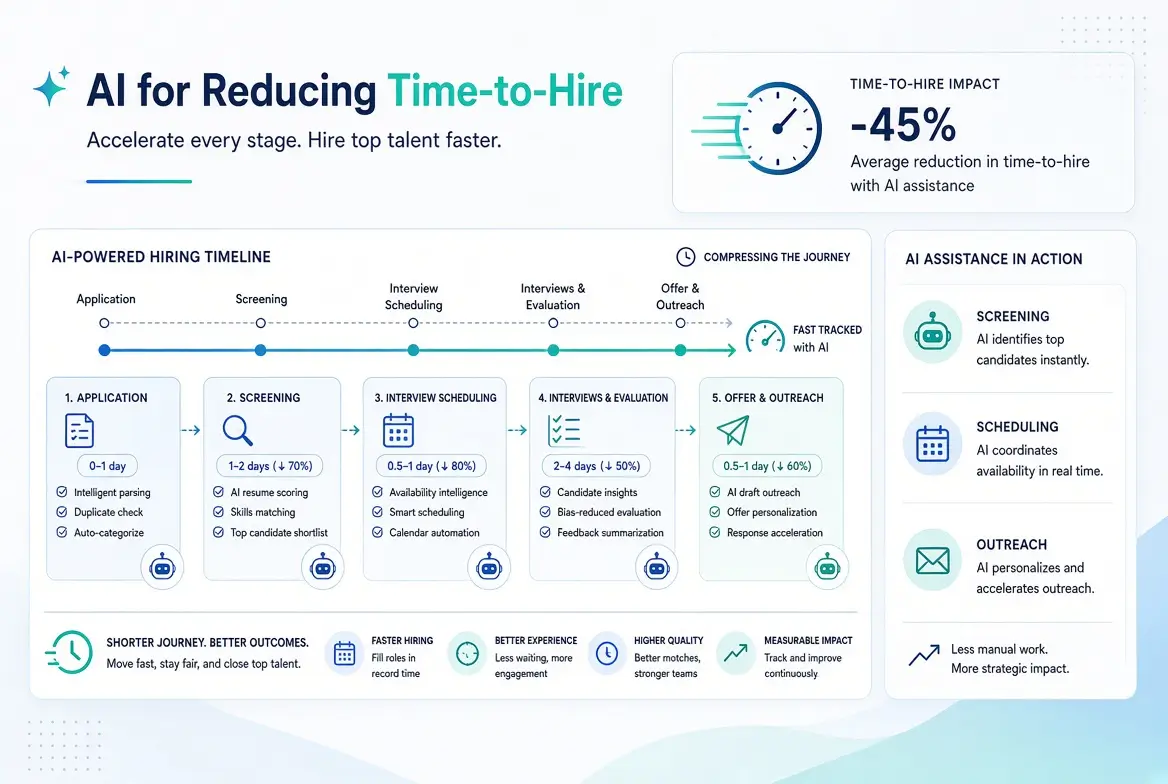
AI for reducing time-to-hire works best when it removes waiting and repetitive work, not when it tries to replace judgment. The biggest gains usually come from faster first-pass screening, quicker outreach, self-serve scheduling, and tighter decision loops, while humans stay accountable for final advancement and offers.
Why Time-to-Hire Stays High
In my experience, most delays are not caused by a shortage of applicants. Hardly. They come from process friction:
- Manual resume review at volume
- Slow movement from application to first contact
- Back-and-forth interview scheduling
- Inconsistent interview preparation
- Delayed debriefs and approvals
- Weak candidate communication between stages
AI can compress several of these stages. It cannot fix unclear role requirements, indecisive stakeholders, or missing evaluation standards by itself.
Where AI Makes the Biggest Difference
1. Faster First-Pass Screening
First-pass CV review is often the largest early bottleneck. AI can summarize applications against clear must-have criteria and help recruiters focus on the strongest and most relevant profiles first.
My recommendation is to use AI as decision support, not as an automated reject engine. For a practical method, see:
How to Use AI to Screen Resumes
2. Quicker Job Launch and Role Clarity
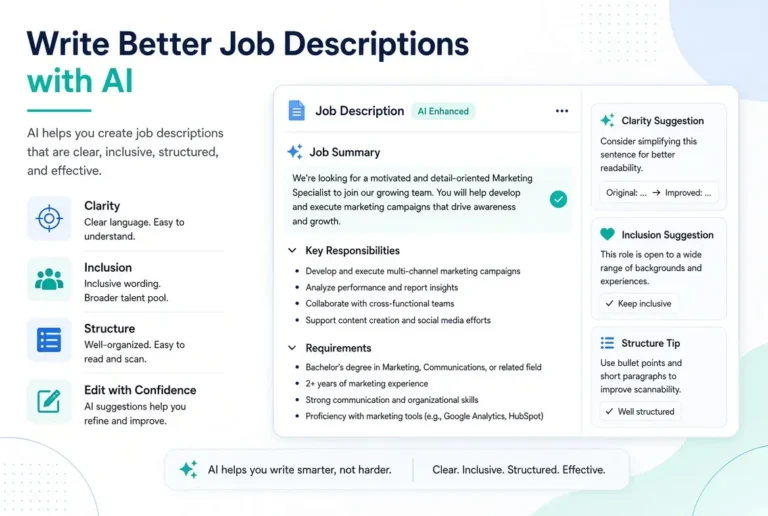
Vague job descriptions slow everything downstream. AI can help draft clearer, more structured postings faster so sourcing and screening start on better inputs.
See our related guide:
How to Use AI for Job Descriptions
3. More Efficient Candidate Outreach
When inbound volume is low, delayed outreach extends the cycle. AI can draft personalized first messages and follow-ups quickly, as long as a human adds a real, specific detail and reviews before sending.
Related guide:
Simple AI Tools for Candidate Outreach
4. Structured Interview Preparation
Unprepared interviews create repeats, confusion, and extra rounds. AI can generate consistent question sets and scorecard prompts so interviews start sooner and stay comparable.
Related guide:
How to Generate Interview Question Using AI
5. Scheduling Without Email Chains
Self-serve scheduling links and calendar tools often remove days of coordination. This is one of the highest-ROI operational changes and does not require advanced AI.
6. Faster Communication Between Stages
Automated acknowledgments, status updates, and interview confirmations keep candidates engaged and reduce drop-off caused by silence.
A Practical Playbook to Reduce Time-to-Hire with AI
Step 1: Measure Your Current Baseline
Track:
- Days from requisition open to first shortlist
- Days from shortlist to first interview
- Days from final interview to offer
- Overall time-to-hire / time-to-fill by role family
Without a proper baseline, “faster” is only a feeling.
Step 2: Define Must-Have Criteria Before Screening
Clear criteria make AI screening useful. Weak criteria make AI amplify confusion.
Step 3: Compress the Top of the Funnel
- Publish a clearer job description faster
- Use AI-assisted first-pass resume summaries
- Contact promising candidates within 24–48 hours when possible
Step 4: Standardize the Interview Stage
- Generate structured questions in advance
- Share scorecards with interviewers
- Keep core questions consistent across candidates
Step 5: Remove Scheduling Drag
- Use booking links
- Limit unnecessary panel complexity
- Set expectations for debrief timing
Step 6: Tighten Decision Speed
AI cannot force a hiring manager to decide. Process can. Set norms such as:
- Scorecards submitted within 24 hours of interview
- Debrief within 1–2 business days
- Offer decisions on a defined timeline
Step 7: Review Weekly
Look at where roles are stalling. Improve the bottleneck, not every stage at once.
What Good Looks Like
Practical targets for many professional roles:
- First-pass shortlist movement measured in hours or 1–2 days, not a week
- Faster transition from shortlist to scheduled interview
- Fewer stalled debriefs
- Stable or improved quality-of-hire indicators alongside speed
Internal reported improvements from our AI-assisted workflows often fall in a broad range, commonly cited around 25–50% when screening, scheduling, and communication are redesigned together. Results vary widely by role difficulty, stakeholder responsiveness, and process maturity.
Some broader employer surveys also show that AI adoption alone does not guarantee faster hiring for every organization.
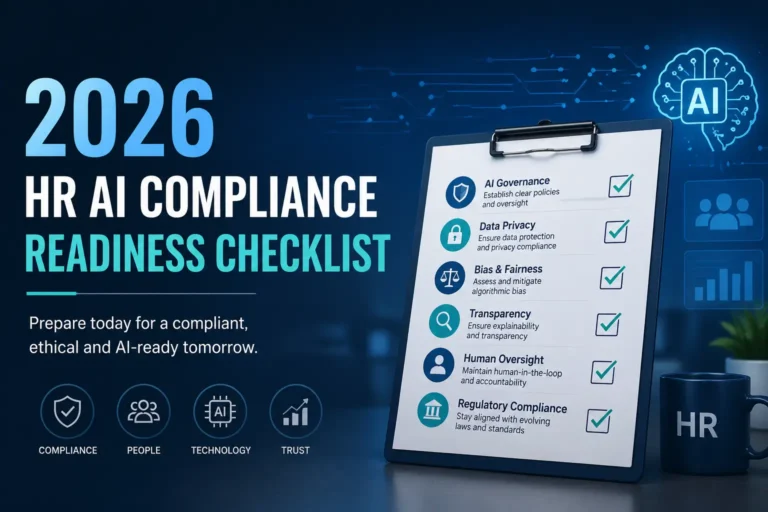
Guardrails: Speed Without Sacrificing Quality or Fairness
- Keep humans responsible for advancement and offers
- Use job-related criteria only
- Avoid fully automated rejection without review
- Communicate clearly with candidates
- Track quality-of-hire, not just speed
- Review outcomes for bias patterns over time
For responsible-use guidance, see:
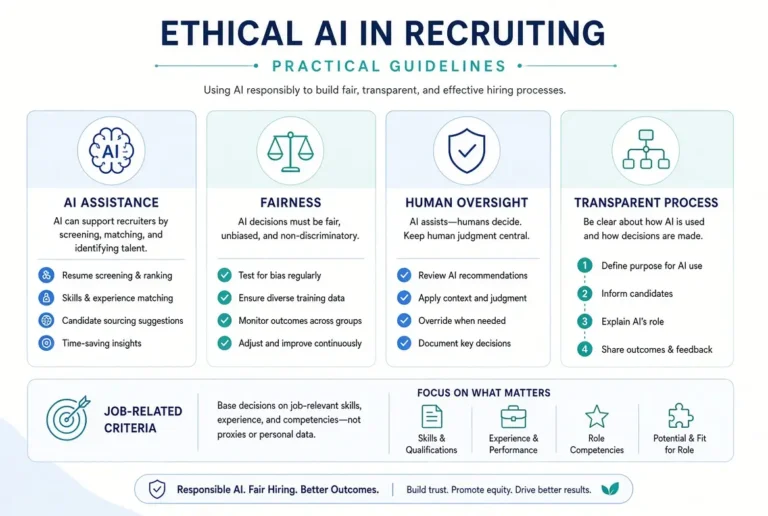
Guidelines on Ethical Use of AI in Recruiting
Budget-Friendly Ways to Start
Contrary to what most people believe, you do not need an enterprise AI suite to improve cycle time.
- One strong AI assistant for drafting and summarizing
- A simple ATS or tracker
- Self-serve scheduling
- Standardized prompts for screening, outreach, and interviews
This is especially good news for small businesses and solopreneurs on a tight budget. More on lean tooling:
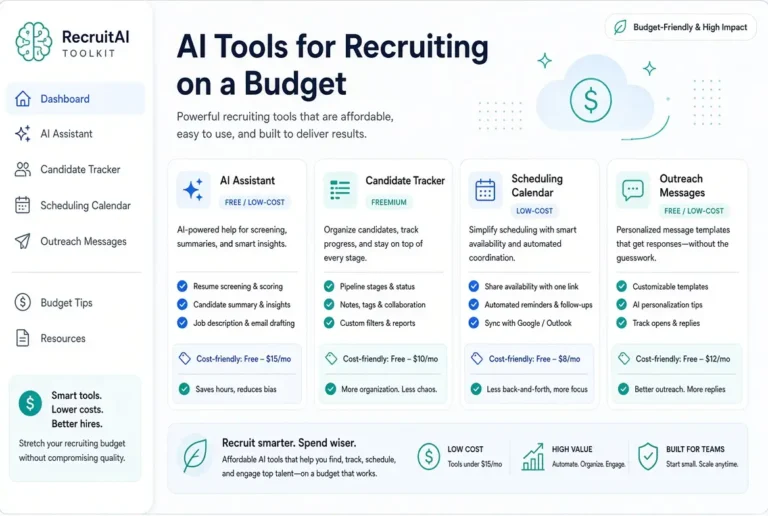
Budget-Friendly AI Tools for Recruiting
How This Fits a Complete Recruiting System
Reducing time-to-hire works best when connected to:
- Clear role definition
- Bias-aware screening
- Structured interviews
- Consistent outreach
- Human accountability
Main pillar guide:
Best AI for Talent Acquisition
Related workflow guide:
AI Recruiting Workflow for Small Businesses
Final Thoughts
AI for reducing time-to-hire is most effective as an operations upgrade. Use it to shrink screening queues, accelerate outreach drafts, prepare interviews faster, and eliminate scheduling delay. Keep humans in control of decisions.
Start with one role family. Measure baseline cycle time, compress the top-of-funnel review, add self-serve scheduling, and set a firm debrief rule. Those changes often improve speed more reliably than buying another tool and hoping the calendar improves on its own.
Frequently Asked Questions
Many teams report meaningful reductions when screening, scheduling, and communication are redesigned, often in the 25–50% range. Exact results depend on process quality and role type.
Usually first-pass screening or scheduling, whichever currently creates the longest wait in your process.
It can if you cut evaluation standards. The better approach is to remove waiting and admin delay while keeping structured interviews and human decision-making.
Not always. Definitions vary by whether the clock starts at requisition open, first application, or first candidate contact. Use one definition consistently.
Yes. A general AI assistant, clear criteria, structured prompts, and simple scheduling tools can improve cycle time substantially.